A wafer fab runs around the clock because a wafer spends weeks moving through hundreds of processing steps, and stopping mid-sequence destroys the work already done. So working shifts in a wafer fab means working where the machines run: monitoring tools, moving wafers through a cleanroom in full protective gear, documenting process data, and handing the area to the next crew exactly as you found it.
If you are weighing a wafer fab operator job, the schedule surprises people more than the work itself. Twelve-hour shifts are standard. Break times are scheduled, not flexible. And a permanent night crew will change how you sleep, eat and see your family for years if you let it.
Below is what a shift actually looks like hour by hour, which schedule patterns fabs use, what the cleanroom demands, and what technicians earn.
Table of Contents
- What Does a Wafer-Fab Shift Involve?
- Why the fab never stops
- What a shift is made of
- A Typical Working Shift in a Wafer Fab
- What Time Do Wafer-Fab Technicians Work?
- What Do You Do Inside the Cleanroom?
- Gowning, step by step
- Rules that never bend
- What Skills Do Fab Technicians Need?
- The technical side
- The personal side
- What Are the Biggest Challenges?
- Time pressure and changing priorities
- Hazards that are managed, not removed
- Fatigue and error cost
- How Do Fab Shifts Affect Work-Life Balance?
- Sleep on nights
- Meals, family and swaps
- When it does not suit you
- How Much Does a Fab Technician Earn?
- What Should You Bring or Know Before Your First Shift?
- Frequently Asked Questions
- How many hours is a wafer fab shift?
- Do wafer fabs run 24 hours a day?
- What does a wafer fab operator do during a shift?
- Is working in a fab cleanroom dangerous?
- What qualifications do I need to work in a wafer fab?
- What is a shift differential at a semiconductor fab?
- Conclusion
What Does a Wafer-Fab Shift Involve?
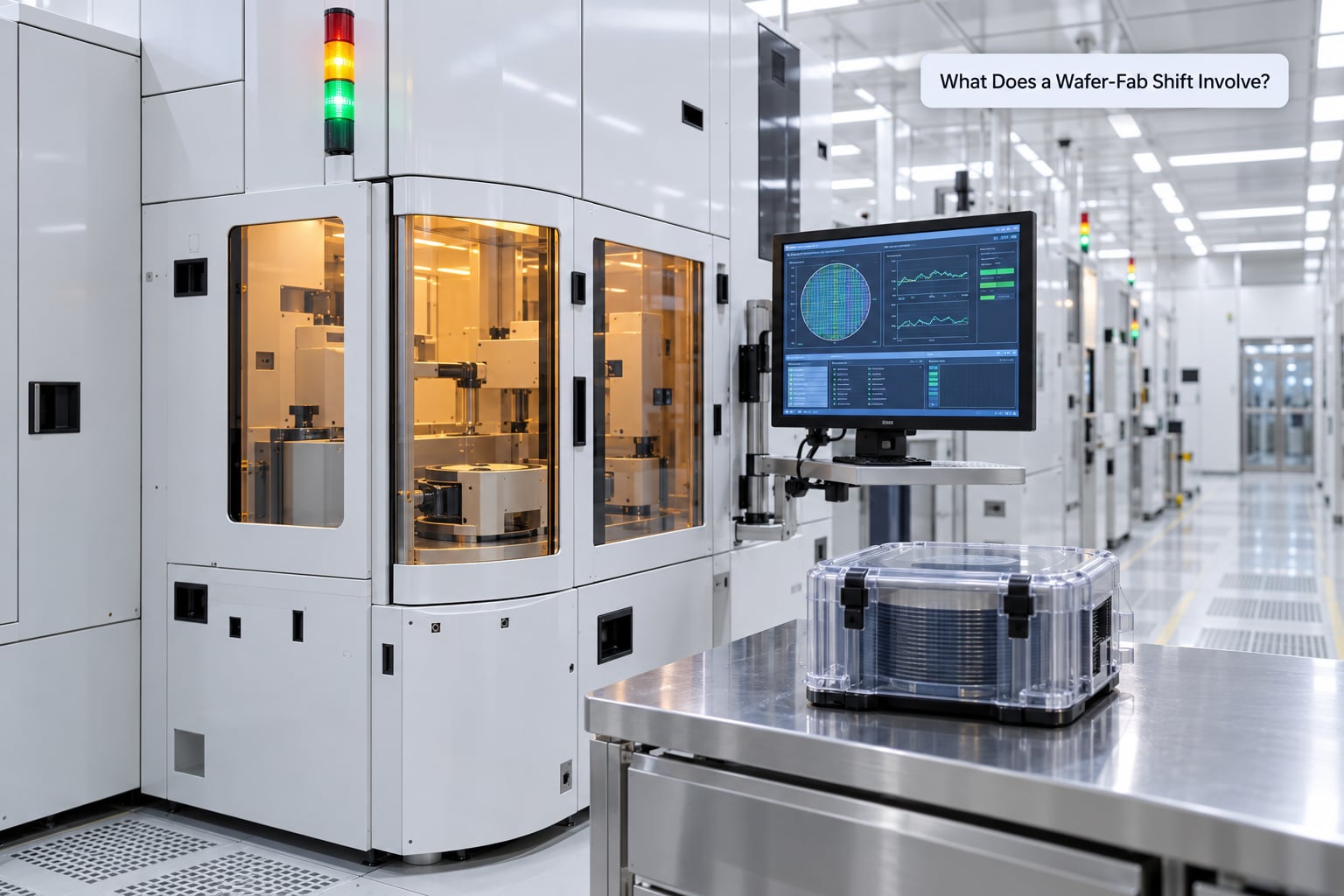
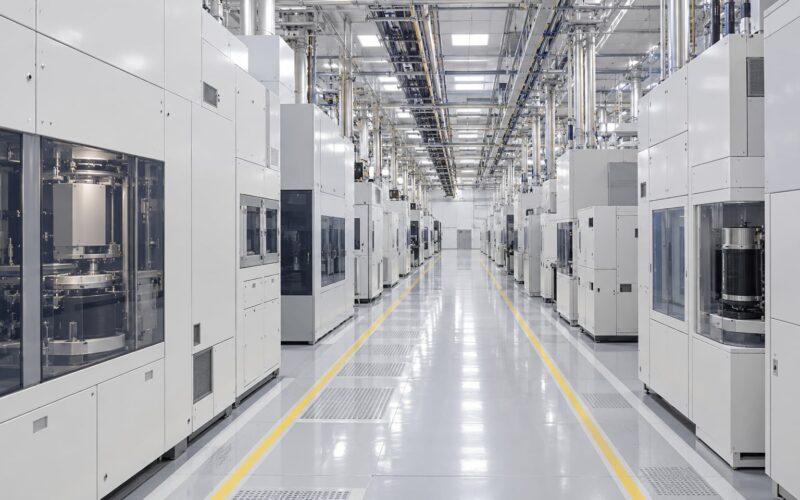
A wafer fab, short for wafer fabrication, is a sealed facility where silicon wafers are built up into microchips through repeated deposition, photolithography, etching and testing. A shift inside one is a structured period of monitoring, troubleshooting, documentation and coordination, not a series of random errands.
The reason for that structure is flow. A single tool going down stops every wafer queued behind it, so operators spend much of their shift keeping material moving. That means watching tool status, checking that process parameters match the spec for the lot running, recording results, and calling a technician or engineer the moment something drifts out of adjustment.
Continuous operation is not a management slogan, it is physics of the process. A lot takes weeks to travel the full route, and the equipment is expensive capital that nobody wants to idle. Fabs run seven days a week, with holidays handled by rotating crews rather than by a shutdown.
Why the fab never stops
Each lot carries a queue of recipe steps it must complete in order. Interrupt it and you do not pause the work, you scrap it. Once wafers are inside a thermal process or a wet chemistry bath, there is no safe way to stop halfway. So the line keeps turning, and the shift schedule exists to give that line people around the clock.
What a shift is made of
- Handover from the outgoing crew, called a passdown, covering open issues and held tools
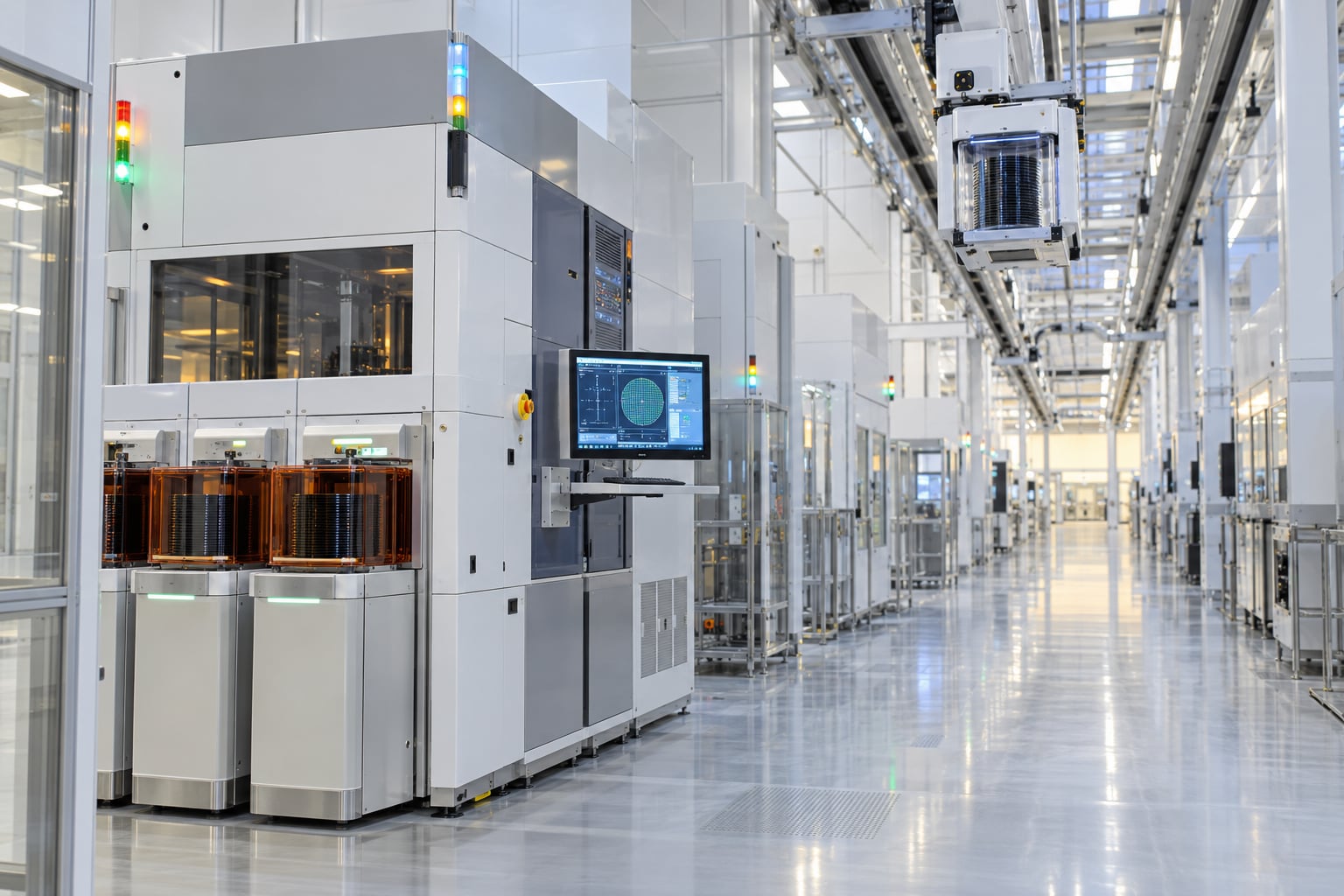
- Loading and unloading wafer carriers into process equipment
- Verifying product specs against the settings on the tool
- Monitoring tool operation, process pace and productivity
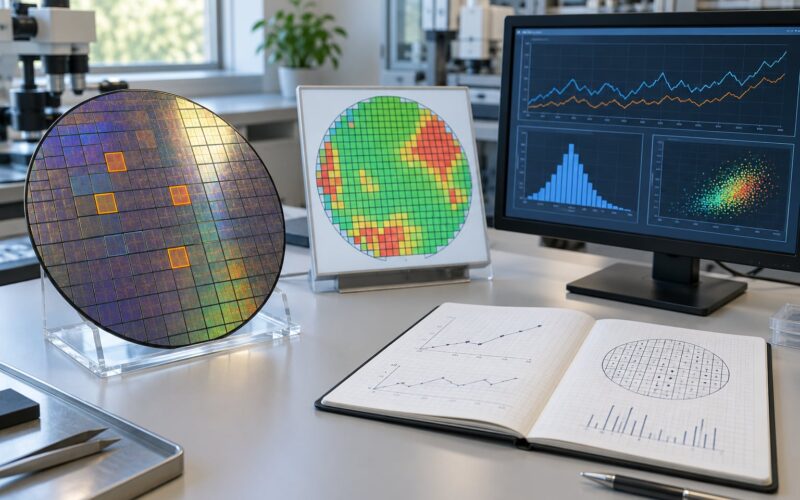
- Logging measurements and running statistical process control checks
- Escalating anything out of adjustment before it becomes a scrap event
A Typical Working Shift in a Wafer Fab
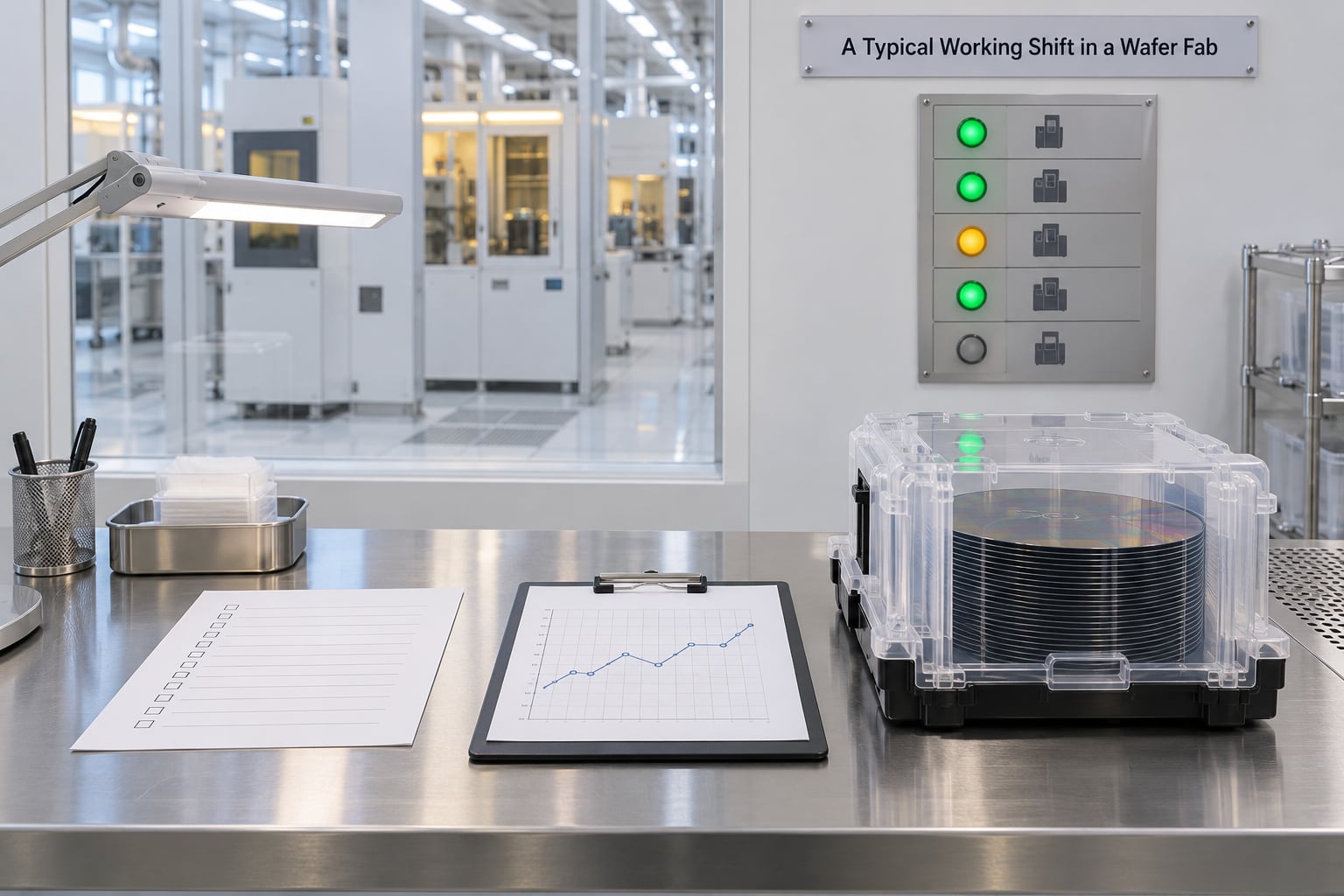
Here is a representative twelve-hour night shift, based on the schedule patterns that appear in live fab job postings. Your fab will order it differently, but the blocks are the same.
| When | What happens |
|---|---|
| Start of shift | Arrive roughly 30 minutes early, clock in outside the cleanroom, remove personal items, shower if required, then gown in the prescribed garment order. Pass through the air shower before entering the process area. Team passdown runs at the start of shift with the supervisor and the rest of the crew, covering held tools, running lots, quality holds and any maintenance in progress. |
| First production block | Walk your assigned tool list, confirm recipe and chamber status, load wafer carriers, and start routine measurements. Verify each product spec against the equipment settings before release. Early in the shift the floor is busiest, with supervisors, engineers and maintenance staff all moving through. |
| Mid shift | Scheduled breaks rather than ad hoc ones. Because coverage has to hold at all times, fab postings are explicit that punctuality returning from breaks and lunch is mandatory. This is the part new hires push back on hardest, and it is worth asking your supervisor directly how breaks are scheduled in your area. |
| Second production block | Trend monitoring and statistical process control charts, log entries, e-test results, plus whatever the passdown flagged. If a parameter drifts, you recognise it, hold the affected material and escalate. On a night crew there is less foot traffic, so issues often get caught earlier. |
| End of shift | Start the handover about 30 minutes before the change. Open issues get walked down with the incoming operator, held material and tool holds get named out loud, and anything unusual gets written down rather than described from memory. De-gown in the reverse of the gowning order, exit through the gowning room, clock out. |
What gets said at a passdown is worth knowing in advance. Expect a list of tools on hold and why, lots under quality hold, a note on any recipe change, and the names of people you should call if something stops. At one 1990s fab described in Texas Monthly’s Wafer Madness, operators stood in a circle around the supervisor and talked over the constant fan noise. Modern fabs are quieter and more often use a written handover sheet, but the content has not changed much.
What Time Do Wafer-Fab Technicians Work?
Four shift patterns cover most of the industry. Which one you land on depends on the facility, the department and how much the site runs around the clock.
| Pattern | Shift length | Typical start | Days on and off | Differential |
|---|---|---|---|---|
| Day shift, single crew | 8 hours | Early morning | 5 on, 2 off, Monday to Friday | Usually none |
| Three-crew coverage | 8 hours | 6 AM, 2 PM, 10 PM | 5 days on rotating crews, weekends included | Second and third shift |
| 12-hour compressed | 12 hours | 6 AM or 7 PM | 4 on / 3 off one week, then 3 on / 4 off the next | Both shifts |
| Rotating 4-on / 4-off | 12 hours | Varies by crew | 4 on, 4 off, rotating between day and night | Night and weekend premium |
The compressed twelve-hour pattern is the one most applicants now meet first. An onsemi posting for a post fab wafer operator in East Fishkill, New York describes twelve-hour shifts alternating three working days one week and four the next. A contractor posting in Phoenix describes the same 4-on/3-off then 3-on/4-off rotation with twelve-hour shifts starting at 6 AM. GlobalFoundries has advertised a rotating 4-on/4-off maintenance schedule with a day shift running from 6:45 AM to 7:15 PM.
Some fabs still run a permanent night crew, where one team works third shift indefinitely. Employees on that pattern describe it as quieter, with fewer supervisors on the floor and fewer equipment issues competing for attention. The cost is that your body clock never fully resets, which is a trade many people make deliberately and others regret quickly.
Overtime is a normal part of fab operations rather than an exception. Reviews of wafer fab work at several manufacturers consistently mention long hours and overtime showing up on nearly every shift, and a high school diploma or GED is generally enough to be considered for an entry operator role, with semiconductor experience preferred but not required.
What Do You Do Inside the Cleanroom?
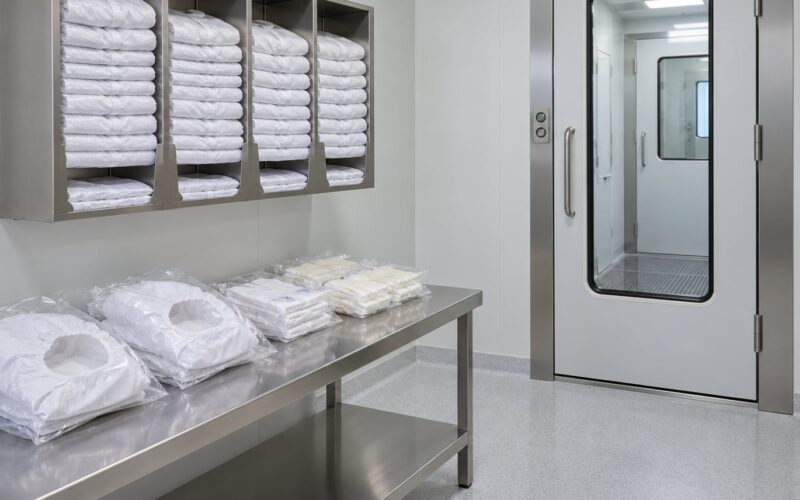
The cleanroom is the whole working environment, and the gowning procedure is the part every new technician struggles with at first. Job postings list the required personal protective equipment plainly: a bunny suit, gloves, safety glasses, approved cleanroom shoes, and face coverings.
Gowning, step by step
- Enter the gowning area in street clothes, no makeup or personal products on exposed skin
- Shower if the site requires it, then dry fully with a dedicated towel and dryer
- Put on the hood and coverall, sealing the suit at wrists and ankles
- Add safety glasses and the approved face covering
- Step into cleanroom footwear, keeping the suit hem off the floor
- Pull on gloves last, or change them every time you leave the process area
- Pass through the air shower, which blows air at you for a set time before the interlock releases
Rules that never bend
No bare hands on wafers, ever. A fingerprint carries salts and oils that can kill a device, so wafers are handled with approved gloves or a wafer handler, and a dropped wafer is treated as scrap rather than picked up. Only approved writing tools are permitted inside the area, since many pens leak materials that would contaminate a bay.
Keep your body out of the airflow, do not talk in a bay while a process is open, and move deliberately. Overhead automated material handling systems carry wafer pods along ceiling rails, and people are taught to stay out of their path rather than to guess where one is going.
Socialising under all that gear takes some adjusting. Workers describe recognising colleagues by build or walk and reading mood from the eyes behind the safety glasses. Inspecting wafers at high magnification for defects can also make new people queasy for the first week, which is why beginners are usually paired on inspection tasks early on.
What Skills Do Fab Technicians Need?
You do not need a semiconductor background to get hired. You need attention to detail, the willingness to follow a written procedure exactly, and enough patience to notice a small drift before it becomes a large one. Live postings for operator roles ask for computer literacy and strong attention to detail rather than a degree.
The technical side
Reading a run chart or a process control chart and recognising what an out-of-limit point looks like. Using the fab’s computer systems for lot tracking, log entries and shift handover. Understanding which parameters matter in your process area, whether that is photolithography, etch or deposition. And knowing the escalation path so you call the right person the first time.
The personal side
Working shifts in a wafer fab rewards people who stay calm when a tool alarms at 3 AM with nothing wrong, and who stay careful when it alarms with something seriously wrong. Communication matters more than people expect, because most of the shift is spent handing information to the next person.
| Role | Typical shift | Typical entry route |
|---|---|---|
| Wafer fab operator | Rotating or permanent crew | High school diploma or GED, on-the-job training |
| Process technician | Runs with the process area | Associate degree or technician experience |
| Maintenance technician | Rotating, often on call | Apprenticeship or trade school |
| Process engineer | Mostly day, on call for excursions | Bachelor’s degree in a science or engineering field |
| Device engineer | Mostly day | Bachelor’s or graduate degree |
Progression usually runs operator, then senior operator or technician, then into process or equipment engineering. It is real, but it is not automatic. A training coordinator at a Texas fab described in that 1996 feature was promoted into a training department after a year and nine months, which shows how quickly a good operator can move once the site trusts them.
What Are the Biggest Challenges?
Repetition is the first thing people mention and it is not a small thing. A shift can be the same cycle of load, verify, measure, log for eleven hours, and the mental load of staying precise through that repetition is a genuine burnout risk. Reviews mention the job task gets repetitive while the hours stay long.
Time pressure and changing priorities
A tool goes down, a queue builds behind it, and a supervisor asks how long until it recovers. Then a lot flags an out-of-spec measurement and the priority flips to holding material and finding the cause. Shift work means you learn to switch tasks without dropping the thread on the one you were already holding.
Hazards that are managed, not removed
Cleanroom work involves acids, plasma gases and, near ion implanters, radiation. Hydrofluoric acid is the one workers in older accounts single out, because skin contact gives little immediate warning. Modern sites handle this with chemical handling training, interlocks, spill response procedures and badge monitoring, but the hazard is real and it is part of the job.
Fatigue and error cost
Tired people miss small changes. In a process where a missed drift can scrap a batch of wafers worth thousands each, the cost of an error is measured in the tens of thousands of dollars. That is why procedures are written the way they are, and why deviating from one needs an approval rather than a judgement call.
How Do Fab Shifts Affect Work-Life Balance?
A predictable rotation is manageable. An unpredictable one is not. The single biggest difference between technicians who handle shift work well and those who burn out is whether the schedule is stable weeks in advance, because a compressed twelve-hour week eats four evenings or four nights that were otherwise yours.
Sleep on nights
Keep the same sleep window every day while you are on nights, roughly three to four hours before you go in and a full block after. Blackout curtains and a cool, dark room matter more than willpower. People who work a permanent night shift often reverse to a normal schedule on weekends for the few commitments that cannot move, which works until it stops working and you are running on jet lag.
Meals, family and swaps
Meal breaks on a twelve-hour shift are short and scheduled. Eating something substantial before your break window matters more than what you bring. Childcare is the hardest practical problem, because a 6 PM to 6 AM shift does not line up with school hours, and many sites fill the gap with shift swaps run through a supervisor or a union process where one exists.
When it does not suit you
Three things come up again and again as deal breakers: a genuine inability to tolerate twelve-hour shifts, discomfort being in full body protective equipment in a confined space, and not being able to work nights at all. None of those are character flaws. Day administrative and engineering roles exist inside the same fab and they are worth asking about.
How Much Does a Fab Technician Earn?
Pay in the semiconductor fab sector is commonly described by workers as decent, and the hours as long, which is roughly the right summary. Entry-level operator postings in the United States commonly advertise base rates sitting in the low twenties an hour before differentials, and a shift differential is usually added on top for evening, night and weekend work.
Several things move that number around. Location is the biggest one, since fabs cluster in a handful of states with very different costs of living and labour markets. Working pattern matters too, because a permanent night crew earns more than a day crew doing the same job. Education, certifications, department and facility type all feed in, and overtime on a 12-hour compressed week adds up over a year in a way an hourly figure does not show.
Treat any posted range as one employer’s range on one date. Fab pay is posted, negotiable within a band, and changes with the local labour market. If you are comparing offers, ask directly about the differential, about overtime frequency, and about how the schedule affects your benefits, because those three move the annual number more than the base rate does.
What Should You Bring or Know Before Your First Shift?
The first week is mostly logistics and procedure, not production. Getting these right in advance saves you the awkward version of learning them.
- Government identification and any required forms or eligibility documents, completed ahead of time
- Closed-toe, flat, non-slip shoes appropriate for long hours on cleanroom floors, and clothing you can wear under a coverall
- Nothing scented: no perfume, no lotion, no strong detergent on your skin or clothes
- Your locker or gowning locker assignment, and the facility’s rules for storing personal items
- Safety orientation and cleanroom training, which usually happens before you are allowed inside the process area
- Your supervisor’s answers to four questions: how breaks are scheduled, how a shift swap is requested, who you call for each type of alarm, and what documentation you are expected to complete on your own
For the first 30, 60 and 90 days, the pattern is usually learn the tools, then learn the process, then run the process. Most new operators say the learning curve is steeper than expected, and that being paired with an experienced technician for the first weeks is the difference between a good start and a rough one. If nobody assigned you a mentor, ask.
Frequently Asked Questions
How many hours is a wafer fab shift?
Most wafer fab shifts run eight or twelve hours. Three-crew coverage uses eight-hour shifts starting early morning, mid afternoon and late evening. The 12-hour compressed pattern, now the most common one applicants meet, alternates four working days and three off one week with three on and four off the next. A few maintenance and process roles use a rotating four-on, four-off schedule.
Do wafer fabs run 24 hours a day?
Yes, effectively. A wafer spends weeks moving through hundreds of process steps, and interrupting a lot partway through destroys the work already done rather than pausing it. Fabs therefore run around the clock, seven days a week, with crews covering holidays. That continuous operation is the reason shift structures exist at all.
What does a wafer fab operator do during a shift?
Operators load and unload wafers into production equipment, verify product specs against the equipment settings, monitor tool operation and process pace, record data and run statistical process control checks. The constant thread is keeping material moving, because a tool that stops stops every wafer queued behind it. Recognising something out of adjustment early is the core skill.
Is working in a fab cleanroom dangerous?
Cleanroom work involves real hazards, mainly acids, plasma gases and radiation near ion implanters. Sites manage these with chemical handling training, interlocks, spill response procedures and badge monitoring. The greater everyday risk is fatigue and repetitive strain, plus the cost of a process error if a drift is not caught. Training and strict adherence to written procedure are what keep the job safe.
What qualifications do I need to work in a wafer fab?
A high school diploma or GED is generally enough for entry-level operator roles, and most postings say semiconductor experience is preferred but not required. You also need the physical ability to carry roughly fifteen pound wafer pods for a full shift and climb stairs while carrying them. Computer literacy and careful attention to detail are the two skills employers name most often.
What is a shift differential at a semiconductor fab?
A shift differential is the extra pay an employer adds for working outside standard day hours. Community discussion of fab hiring in Oregon notes employers usually offer one for night shift, typically covering work from 6 or 7 PM to 6 or 7 AM. On compressed 12-hour schedules both the day and night crews usually qualify, and permanent night crews earn it every shift.
Conclusion
Fab shift work is less glamorous than the outside view suggests and more interesting than the review sites imply. You show up early, spend the day in a bunny suit moving wafers and watching tools, and go home knowing exactly what you handed over to the next crew. The 12-hour schedule is normal, overtime is normal, and the physical load is real.
Before your first shift, find out three things from the employer rather than from a forum: how breaks are scheduled, how shift swaps are requested, and who you escalate to for each type of alarm. Learn your facility’s schedule pattern, safety rules, documentation process and escalation path, and the shift stops feeling unpredictable within a few weeks.