Taiwan is central to global chip supply because it fabricates the large majority of the world’s most advanced logic chips and supplies a big share of the packaging, testing and assembly capacity that turns finished wafers into usable silicon. It is not the only link in the chain, though: chip design software, lithography tools, memory and most raw materials still come from elsewhere.
This article covers the Taiwan role in global chip supply explained stage by stage, then works through where the percentages come from, why the island ended up in this position, what could disrupt it, and what buyers and engineers should actually watch. If you only need the headline: think of Taiwan as the world’s advanced manufacturing centre attached to a very large support industry, not as the whole semiconductor supply chain.
Table of Contents
- Taiwan Role in Global Chip Supply Explained
- Taiwan’s Role in the Global Semiconductor Value Chain
- How Much of Global Chip Supply Depends on Taiwan?
- What Taiwan Role in Global Chip Supply Explained by Segment
- Why Taiwan Became a Semiconductor Manufacturing Hub
- What Could Disrupt Chip Supplies?
- How Taiwan Strait Risk Affects Chip Prices and Availability
- How the United States and Other Countries Are Reducing Dependence
- What Signals Should Chip Professionals Watch Next?
- Frequently Asked Questions
- Why is Taiwan so important to the global semiconductor supply chain?
- Does Taiwan make all the world’s computer chips?
- What happens to global chip supplies if Taiwan Strait access is disrupted?
- Are computer processors and memory chips made in the same way?
- Can the United States become completely independent of Taiwan for chip production?
- Would chip prices double immediately during a supply disruption?
- Conclusion
Taiwan Role in Global Chip Supply Explained
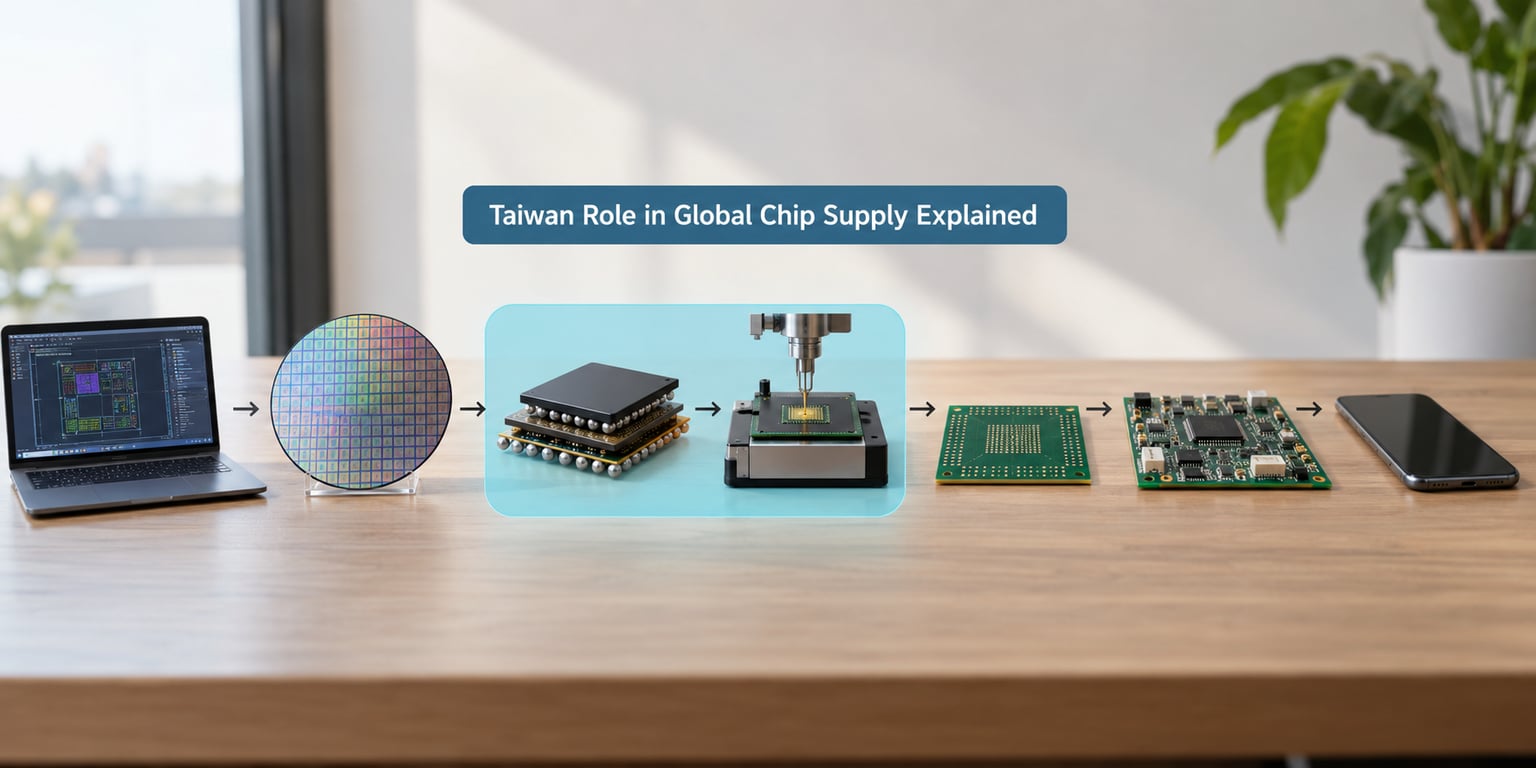
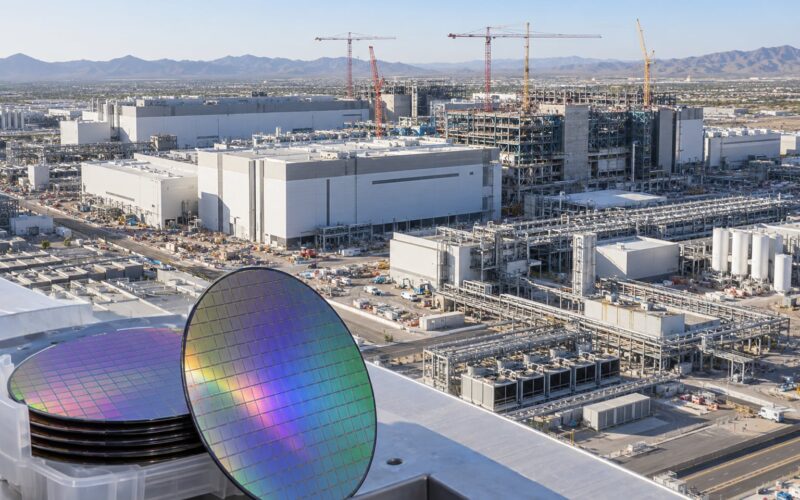
The Taiwan role in global chip supply explained in one sentence: Taiwan is the leading external manufacturer for advanced chips and one of the three or four places on earth where they can be made at all. Publicly cited figures, mostly dated 2025 and 2026, put its share of global semiconductor production above 60%, its share of leading-edge logic fabrication around 90%, and its share of global advanced packaging and test above 50%.
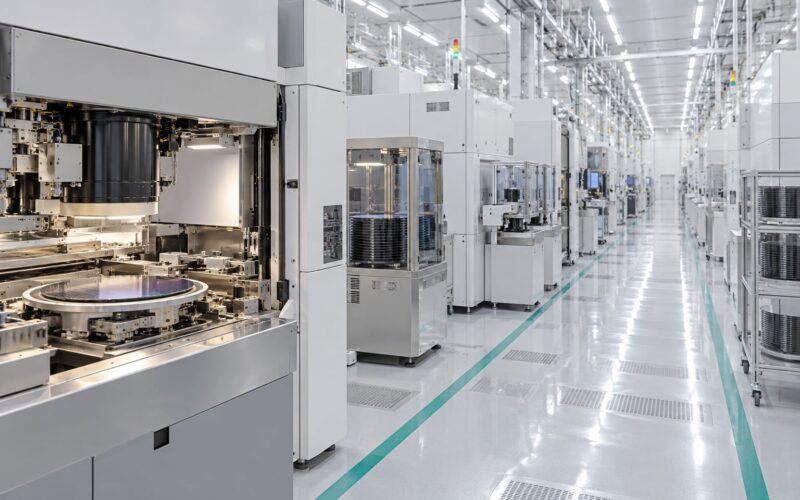
Those three numbers describe different things. Sixty percent measures total output including mature-node chips. Ninety percent measures the hardest part of the industry, fabricating logic at the smallest process nodes using extreme ultraviolet lithography. More than half for packaging measures the back end of the line, where dies are stacked, bonded to substrates and tested.
Readers on r/Semiconductors tend to pick up on exactly this problem, and the discussions there circle the same complaint: the headline number gets quoted without the denominator, so a figure meant for one segment ends up describing the whole industry. The same threads make another point worth repeating here, that supplier density and engineering culture matter more than the fab shell itself.
Taiwan’s Role in the Global Semiconductor Value Chain
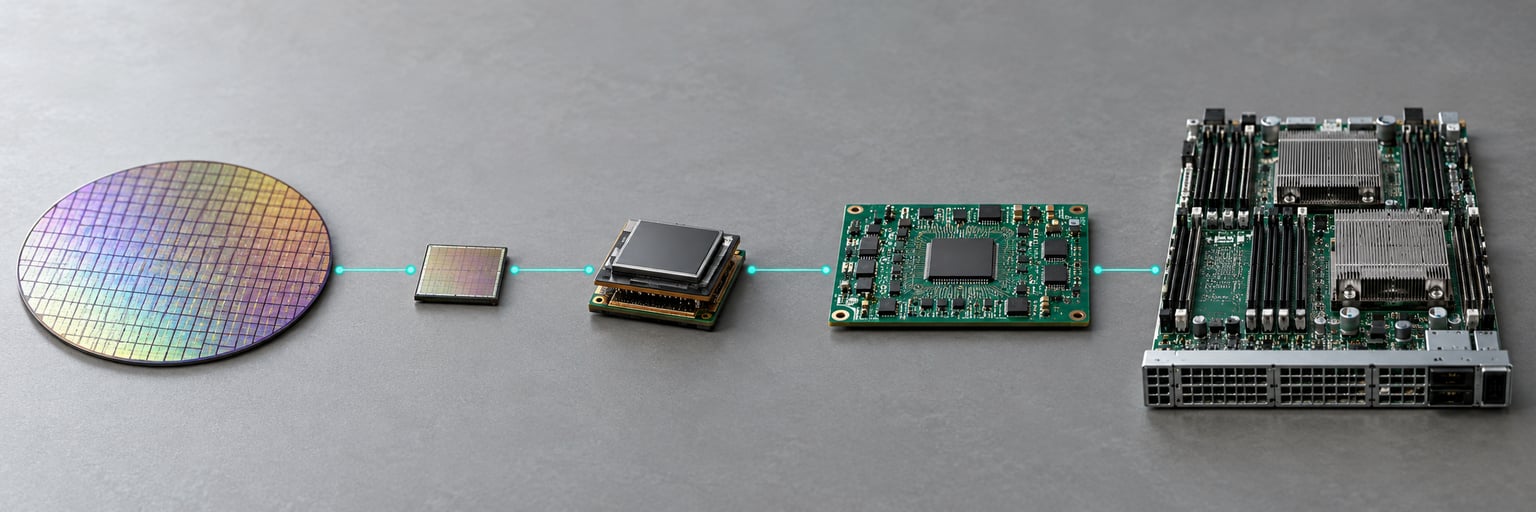
Making a chip is a sequence of specialised businesses, and Taiwan is strong in some of them and dependent on others. Walking the stages in order shows where the real leverage sits.
- Chip design and IP. Design houses write the architecture, and Taiwan has a real cluster of them. MediaTek dominates smartphone application processors by volume, Realtek covers connectivity and audio, Novatek handles display drivers, and Alchip does custom ASIC design for hyperscale AI accelerators. Add Himax and Silicon Integrated Systems and you have an ecosystem, not one company.
- Design software. This is the weak spot. Electronic design automation tools come from the United States, principally Synopsys and Cadence Design Systems, with Arm providing the processor instruction sets underneath. Taiwan designs chips, but it does not design the software used to design them.
- Wafer fabrication. This is the core. Taiwan Semiconductor Manufacturing Company, founded in 1987, is the pure-play foundry that fabricates chips for NVIDIA, Apple, AMD, Qualcomm and hundreds of others without ever selling a chip of its own brand. United Microelectronics covers mature and specialty nodes. Most leading-edge capacity sits in the Hsinchu, Tainan and Taichung areas.
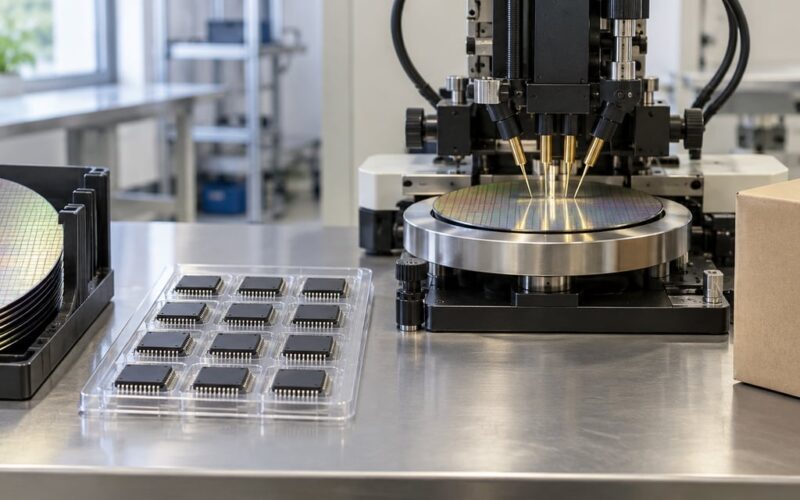
- Advanced packaging. Once a wafer is finished it still has to be cut, stacked and connected. TSMC’s CoWoS line, used for AI accelerators and high-bandwidth memory stacks, is the best-known example, and it sits in Taiwan.
- Assembly and test. Outsourced assembly and test providers, usually called OSATs, finish and test chips. ASE Technology Holding is the largest, with King Yuan Electronics, Powertech Technology, Orient Semiconductor and ChipMOS also significant. This tier is where a second, less discussed dependency lives, and it is described in more detail below.
- Substrates, boards and components. Chip carriers, printed circuit boards, connectors, inductors and capacitors come from a mix of Taiwan, Japan, mainland China, South Korea and Southeast Asia. Taiwan has strength here but does not dominate it.
- Systems and modules. Contract manufacturing of laptops, phones and servers is a separate layer again, largely in mainland China and Southeast Asia.
So the honest summary is that Taiwan controls the two stages most companies cannot easily substitute, fabrication at the leading edge and the back-end packaging and test that follows it, plus a meaningful slice of front-end design. Everything upstream of design and most of the materials chain sit elsewhere.
One point from r/taiwan threads is worth carrying through the rest of this article: new capacity dropped into an empty country does not automatically work. Commenters there argue there is no spot for outside fabs to slot into the existing Taiwanese value chain, because the machinery and materials suppliers, the mask shops, the substrate makers and the experienced maintenance crews are all already there.
How Much of Global Chip Supply Depends on Taiwan?
Every percentage below describes a different denominator, so read the definition column before quoting any of them. Figures are drawn from public reporting and industry trackers between 2025 and 2026, and they move as capacity is added.
| Segment | Taiwan share | What the number measures | Main Taiwanese players |
|---|---|---|---|
| Total semiconductor production | Above 60% | All chips, all nodes, measured by output value or capacity | TSMC, UMC, memory and panel driver makers |
| Leading-edge logic below 7nm | Roughly 90% | Advanced logic wafer capacity, dominated by one company | TSMC |
| Foundry services overall | Around 50% to 70% | Share of merchant foundry revenue | TSMC, UMC |
| Advanced packaging and test | Above 50% | Outsourced assembly and test market share | ASE, KYEC, PTI, OSE |
| Design services and custom silicon | Large but not majority | ASIC design houses serving AI and networking | Alchip, MediaTek, Novatek |
| Memory, DRAM and NAND | Low | South Korea, Japan and mainland China lead instead | Limited Taiwanese memory base |
Three separate caveats explain most of the confusion around the famous 90% claim. First, node definitions differ. Capacity for logic at 3nm-class and below is where Taiwan dominates; mature-node capacity for automotive, industrial and analog chips is spread across the United States, mainland China, Japan, Singapore and Malaysia. Second, unit counts and value counts diverge. Memory dies are numerous and physically large, so counting all advanced silicon rather than only advanced logic drops Taiwan’s share to roughly a tenth. Third, company share is not country share. Samsung and Intel are investing heavily, and both build leading-edge logic, so the gap is narrowing slowly rather than standing still.
What Taiwan Role in Global Chip Supply Explained by Segment
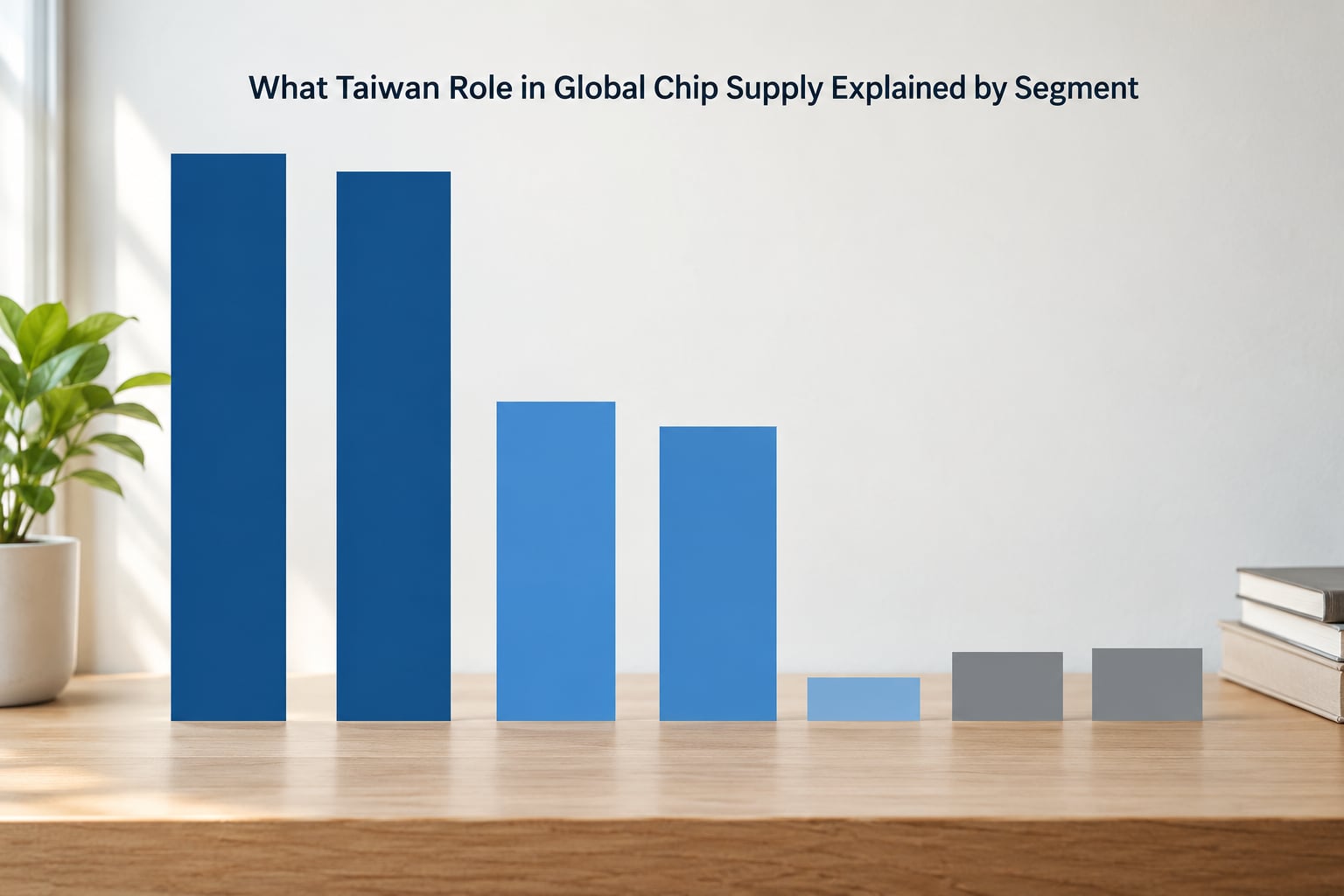
Where Taiwanese companies genuinely dominate is wafer fabrication at the leading edge and outsourced packaging and test. Where they are important without being dominant is foundry services overall, chip design, printed circuit boards and substrates. Where the industry depends on imports is design software, lithography equipment, memory and the bulk of specialty gases and bulk chemicals.
That last group deserves emphasis because it is the part of the chain no Taiwanese policy can replicate quickly. Extreme ultraviolet lithography machines come from ASML in the Netherlands, with the light source built by Cymer in the United States. Most deposition, etch and metrology tools come from Applied Materials, Lam Research and KLA-Tencor. The photoresists, specialty gases and silicon wafers themselves come from Japan, Germany and the United States.
Scale of the industry gives a sense of weight. Taiwan’s semiconductor sector generated revenue reported at around 165 billion US dollars in 2024, close to a fifth of the country’s gross domestic product, and TSMC reported quarterly revenue of roughly 35.9 billion US dollars in the first quarter of 2026 while the wider industry grew at a pace industry trackers put near 40% on AI and high-performance computing demand. Those numbers explain why power, water and land use feature so heavily in Taiwanese domestic politics.
Why Taiwan Became a Semiconductor Manufacturing Hub
Taiwan’s position was built deliberately over about fifty years, and the sequence matters more than the talent mythology.
- A deliberate policy pivot in the 1970s. Taiwan’s early industrial strategy focused on labour-intensive assembly. The Ten Major Construction Projects of the 1970s redirected effort toward capital and technology industries, including electronics.
- Technology transfer through ITRI. In 1976 an agreement with RCA brought a licence and know-how for semiconductor manufacturing to Taiwan, with the Industrial Technology Research Institute playing the central role in absorbing it and building local capability.
- The pure-play foundry bet. United Microelectronics was founded in 1980 to carry that capability forward. TSMC followed in 1987, created with capital from the National Development Fund and deliberately structured to make no branded chips at all. That single decision turned internal competition for customers into an incentive to deliver for everyone else’s designs.
- Science park clustering. Hsinchu Science Park opened in the early 1980s and put design houses, research institutes, foundries and suppliers within driving distance of each other. Clusters matter because a fab problem can be fixed by an engineer who is ten minutes away rather than on the other side of an ocean.
- Relentless process discipline. TSMC’s roadmap, from 7nm and 5nm through 3nm, 2nm and the A16 node, depends on high yields rather than on any single piece of equipment. Yield learning compounds, and it compounds fastest where the most competitors sit close together.
Government support was real but not unique to Taiwan. State capital funded the early fabs, energy prices were kept below industrial averages, and university and industry programs keep feeding engineers into the industry, one report putting the projected worker gap in the order of 193,000 people. Comparable incentives in South Korea and the United States show that subsidy alone does not explain the outcome.
The explanation people in the industry tend to accept is the boring one. Decades of specialisation in outsourced foundry work, a dense supplier base, and experienced engineers who have done the same difficult problem many times. SemiWiki forum discussions about whether the supply chain is genuinely relocating split on exactly this point, with several posters arguing the constraint is engineering culture and supplier density rather than concrete.
What Could Disrupt Chip Supplies?
Risks differ enormously in how they unfold, so separating them by timescale is more useful than ranking them by drama.
- Natural hazards. Taiwan sits in a seismic zone, and the 1999 Chi-Chi and 1994 Hualien earthquakes demonstrated that fabs are designed to survive. Wafer inventories and gas delivery arrangements make short outages survivable. What is harder to insure against is correlated damage across many plants at once.
- Water. Fab processes need ultrapure water in enormous volumes, and the 2021 drought and 2022-2023 water stress forced industrial water rationing. Water management is now treated as a strategic supply issue.
- Power. Electricity is the other binding constraint, and grid reliability has been a recurring public concern on the island. Semiconductor manufacturers are investing in renewables and storage to reduce exposure.
- Transport. Almost everything moves by sea or air through a small number of ports and airports. Air freight can absorb small urgent volumes, which is why it costs what it does.
- Cyber incidents. Manufacturing equipment is increasingly networked, which raises the consequences of a successful intrusion.
- Export controls. Restrictions on advanced lithography, AI accelerators and equipment to mainland China reshape who can build what, and can also redirect equipment and inventory in ways that ripple outward.
- Labour and demographics. The workforce gap and intense local competition for engineers constrain expansion rates.
- Conflict. A blockade is the extreme case, and it is a political question rather than a technical one.
Short-term responses and long-term consequences should be kept apart. In the first weeks, buyers draw down inventory, shift volume to other foundry nodes where designs have already been ported, and pay for air freight. Over quarters and years, decisions about tape-outs, packaging sites and equipment orders move, and they move slowly because a design cycle does not fit in a quarter.
How Taiwan Strait Risk Affects Chip Prices and Availability
Fabrication cost and retail price are separated by inventory, product cycles and contracts, so price responses lag physical ones. Expect order effects first and price effects later.
AI servers and data centres see it soonest. Accelerators and high-bandwidth memory compete for the same advanced packaging capacity, so allocation decisions hit buyers in a single product cycle.
Smartphones absorb it through product planning. Application processors, memory and RF parts all pass through the region, and a constrained launch window turns quickly into a shorter production run rather than a higher price.
Automotive chips see the longest recovery. Automotive microcontrollers are mostly mature-node parts with long qualification cycles, so shortages surface as allocation and longer lead times for automakers buffering inventory rather than as price rises at the shelf.
Industrial, communications and military hardware sit in the middle. These markets are small-volume, long-life and often bought on long contracts, which smooths prices but delays recovery after a disruption.
Laptops and consumer electronics show the familiar pattern. Retail prices move in small increments driven by inventory, while component allocation changes hit business buyers first through lead times.
The practical consequence for procurement teams is that a disruption shows up in lead time and allocation long before it shows up in a price list. If you want early warning, watch the two, not one.
How the United States and Other Countries Are Reducing Dependence
Governments have responded with money, mandates and new plants. None of it replaces Taiwan, and most industry analysts have been blunt about why.
The United States is building through TSMC in Arizona, Samsung in Texas and Intel’s own expansion, supported by subsidies and by customer-side pressure. Japan is funding Rapidus alongside TSMC’s Kumamoto fab, and Germany is hosting a TSMC and Bosch joint venture for mature automotive and power chips at what is planned as the Dresden site. India, the Netherlands and a growing list of governments offer incentives aimed at the same goal.
The constraint is time and ecology. A leading-edge fab takes years from site selection to qualified volume production, and by then the node it was designed for may have moved. More importantly, a fab is only one station. Its sustained operation depends on lithography from the Netherlands, tools from the United States, chemicals from Japan, and a trained workforce that takes years to build. A new fab without the surrounding supplier density is exactly the situation r/taiwan posters described as having no place to slot in.
Advanced packaging is drawing more attention than it used to, for the simple reason that it is the constraint people forgot about. Capacity added in a single country helps, but building a packaging ecosystem needs the same substrate, tooling and skills pipeline that a fab does.
What Signals Should Chip Professionals Watch Next?
Useful indicators are the ones that move before headlines do.
- Leading-edge fab utilisation. High utilisation means demand outrunning new capacity, which is what turns a shortage into an allocation problem.
- Advanced packaging capacity expansion. Watch announcements about CoWoS-class lines and about where back-end capacity is being added geographically.
- Customer inventory levels. This is the number that decides whether a fab shortage becomes a consumer shortage.
- Expansion timelines at new fabs. Slippage in Arizona or Kumamoto schedules tells you how quickly capacity can actually move.
- Equipment delivery lead times. Order books at the lithography and metrology vendors are an early read on where capacity is being built, months before it opens.
- Power and water investment. Grid upgrades, offshore wind contracts, industrial water recycling and desalination capacity show whether a region can support the fabs it has promised.
- Export control changes. Rules on advanced chips, equipment and end use shift quickly and affect who can order what.
- Where packaging and assembly sit. Geographic diversification at the back end is the clearest measurable sign of real change.
Frequently Asked Questions
Why is Taiwan so important to the global semiconductor supply chain?
Because almost no other region combines leading-edge wafer fabrication, advanced packaging capacity, supplier density and experienced engineering talent at the same scale. Taiwan fabricates most of the world’s sub-7nm logic and a large share of outsourced assembly and test, so a disruption there affects AI servers, smartphones, cars and industrial equipment at the same time.
Does Taiwan make all the world’s computer chips?
No. Taiwan makes more than 60% of global semiconductor production, which includes mature-node chips for cars, appliances and industrial equipment. Add memory, and most of it is made in South Korea, Japan and mainland China. Counting all advanced silicon rather than advanced logic also drops the headline share to roughly a tenth.
What happens to global chip supplies if Taiwan Strait access is disrupted?
First, buyers work through existing inventory, which typically covers weeks rather than months. Then allocation begins and lead times stretch for advanced logic and packaging. Only later do component costs and retail prices respond. Longer term, tape-out decisions, packaging locations and equipment orders shift, and that adjustment takes years.
Are computer processors and memory chips made in the same way?
Processors are mostly planar logic fabricated on wafers, cut into dies and then stacked using advanced packaging so they can sit next to high-bandwidth memory. Memory is built differently, with layers of cells stacked vertically using processes like 3D NAND, and it is dominated by South Korea, Japan and mainland China rather than Taiwan.
Can the United States become completely independent of Taiwan for chip production?
Not in the near term. New fabs take years to build, need billions of dollars, and still depend on Dutch lithography, US process tools and Japanese materials. Capacity added outside Taiwan reduces dependence rather than removing it, and experienced engineers and full supplier ecosystems take a generation to rebuild in a new location.
Would chip prices double immediately during a supply disruption?
Almost never, not immediately. Prices are buffered by retailer and distributor inventory, long-term supply contracts, and the slow pace at which product cycles turn over. The first visible effect is lead time and allocation for buyers, particularly for advanced logic and packaging, with price changes following months later.
Conclusion
Taiwan’s importance is real but narrower than the headlines suggest. It is strongest in advanced wafer fabrication and in the packaging and test that follows, backed by a strong chip design sector and a supplier base that is hard to copy. It is weak in design software, lithography, memory and raw materials.
A practical first step for anyone working with chips is to map your own exposure. For each product you buy, note the fabrication node, where the die is fabricated, where it is packaged and tested, and which single supplier would hurt most if access were interrupted. That list, more than any global percentage, tells you where to look first.